You are running on time, you have your boarding pass ready, and the security line is moving quickly. Then your bag gets pulled to the side. The TSA officer opens it, holds up a bottle of something, and tells you it cannot go through. It might be the full-size shampoo you forgot to transfer to a travel container, a bottle of duty-free perfume you bought on your last trip, a jar of artisan hot sauce from a farmers market, or a snow globe you were bringing back as a souvenir. Whatever it is, you packed it without thinking, and now you are being told to either check a bag and go back to the ticket counter or leave it behind.
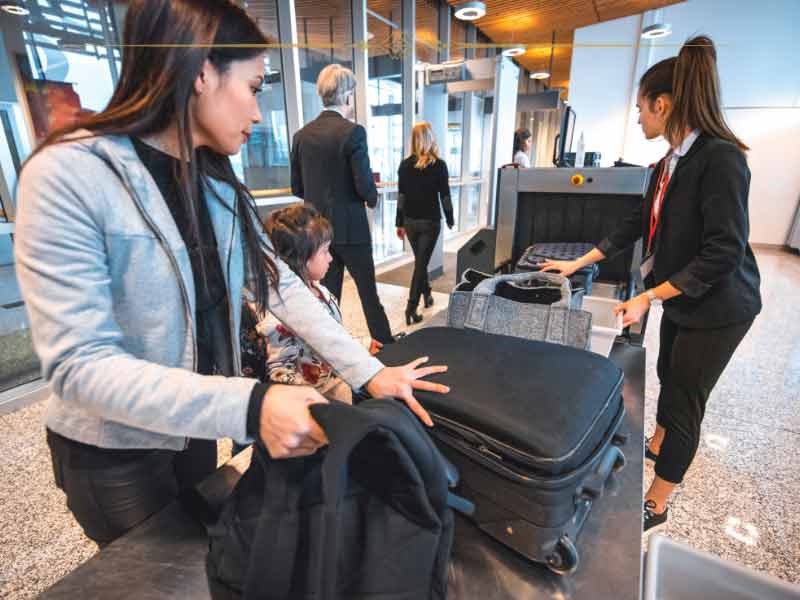
Most of the time, people leave it behind. They are running on a schedule, the gate is across the terminal, and the idea of recovering a confiscated item seems impossible once you have cleared security. For many travelers, the item simply disappears into a bin and is never thought about again, or is thought about with the specific regret that comes from losing something expensive or irreplaceable to a mistake that took three seconds to make.
What very few American travelers know is that at a growing number of airports, confiscated items do not necessarily have to be lost forever. Several UK airports have been operating services that allow passengers to reclaim items that were taken at the security checkpoint, either through mail delivery or through an airport collection point, and awareness of similar options at various international airports is growing. For Americans who travel through European airports, or who are simply interested in how these systems work and whether anything equivalent exists at home, this is information that could save a piece of luggage you genuinely care about.
How the UK’s Airport Recovery System Works
In the United Kingdom, several major airports have implemented what is commonly referred to as a Post and Fly service, which allows passengers whose items were confiscated at the security checkpoint to have those items returned to them rather than disposed of. The service is available at London Stansted, Manchester Airport, Glasgow Airport, Bristol Airport, London Heathrow, London Luton, and London City Airport.
The process begins at the security checkpoint itself. When a security officer identifies an item that cannot proceed through the checkpoint, rather than simply placing it in a general disposal bin, the officer can bag the item and place it in a dedicated secure storage area. The passenger is given a ticket containing a unique reference number that links to their specific confiscated item or items.
Once past security, or at any point within 30 days of the confiscation, the passenger can use that reference number on the service’s website to arrange delivery. The options typically include having the item shipped to any address in the UK or Europe, or choosing to collect it from the airport at a later date. Both options carry a fee, with postal delivery costing more than collection. The specific pricing varies by airport and parcel weight, but as a reference point, sending a small parcel from Stansted to a London address runs approximately 24 British pounds, while airport collection costs around 15 pounds.
The 30-day window is firm. Items that are not claimed within that period are disposed of or destroyed by the airport, so travelers who want to use the service need to act within the deadline rather than assuming they can deal with it whenever it is convenient.
Not every confiscated item is eligible for the service. Alcohol, perishable food items, and anything classified as dangerous goods may not be sent through the system regardless of their value. But for the categories of items most commonly confiscated at airport security, including cosmetics, toiletries, perfumes, food products in containers over the liquid limit, and similar everyday items, the service covers the majority of situations.
The practical mechanics of using the service require one important step that many passengers miss: you have to ask the security officer to process your item through the service at the time of confiscation. If you simply accept that your item is being taken and walk away, it enters the standard disposal process. Requesting the Post and Fly option at the moment the item is identified gives the officer the instruction to bag it, tag it, and place it in the designated storage rather than the disposal bin. Most officers will accommodate the request without difficulty.
Why This Option Is Not More Widely Known
The fact that airport recovery services exist at multiple major airports and are used by a relatively small proportion of the travelers who could benefit from them comes down almost entirely to awareness. When something is confiscated at a security checkpoint, the interaction is typically brief, often slightly stressful, and happens within a context where the traveler’s primary focus is on making their flight rather than on exploring options for recovering an item they are about to lose.
Security officers who know the service exists may not always mention it unprompted, particularly during busy periods when the checkpoint is processing high volumes of passengers. Travelers who do not ask are typically not told. The information is available on airport websites and in pre-travel guidance from some carriers, but it is not prominently featured in the pre-flight advice that most travelers actually read.
The result is a service that exists and works, that is used by travelers who happen to know about it or who think to ask at the right moment, and that is invisible to the majority of passengers who pass through the same checkpoints every day. For Americans traveling through UK airports in particular, whose airports have implemented these systems more broadly than most, the gap between the availability of the service and awareness of it represents a significant number of items that end up destroyed rather than returned to people who would have preferred to keep them.
The US Situation: What Happens to Items Confiscated by the TSA
For American travelers curious about whether any equivalent system exists at US airports, the answer is more complicated and less consistent than what the UK has implemented.
The TSA does not operate a universal lost and found or mail recovery service for confiscated items. When the TSA removes an item from a passenger’s carry-on at a checkpoint, the handling of that item depends on several factors including what the item is, which airport it was confiscated at, and the specific policies of the airport authority rather than the TSA itself.
Some categories of confiscated items are destroyed immediately because they represent genuine security risks or because their handling requires specific procedures. Prohibited weapons, certain chemicals, and other genuinely dangerous materials do not enter any recovery system. But many confiscated items are not dangerous. They are oversized liquid containers, food items, and everyday products that are prohibited in carry-on bags under the 3-1-1 rule or other TSA guidelines simply because of their size or category.
For these items, the TSA’s standard practice at most airports is to place them in a bin or area adjacent to the checkpoint where passengers who choose to can return through security, check a bag, and place the item in checked luggage. This option is available at many airports but requires passengers to exit the secure zone, check the item, and go through security again, which is only practical if there is sufficient time before the flight and if the cost of checking a bag is worth it for the item in question.
At airports where the state or local airport authority operates a formal lost property or confiscated items program, there may be options for claiming certain types of confiscated goods after travel. The specifics are highly variable and airport-dependent, and travelers who want to understand their options at a specific US airport are best served by contacting that airport’s customer service directly rather than relying on general TSA guidance.
The Items Most Commonly Lost at Security and How to Avoid Losing Them
Understanding the most common categories of confiscated items helps Americans make better packing decisions and avoid the situation entirely. The most frequently confiscated items at both US and international airport checkpoints fall into predictable categories that reflect the same packing mistakes being made repeatedly across millions of travelers.
Full-size toiletries are the largest category. Shampoo, conditioner, body wash, face wash, moisturizer, and similar products that come in containers larger than 3.4 ounces are the most common victims of the liquid rule. The 3-1-1 rule is widely known but widely violated through oversight rather than intention: a traveler who packed in a hurry, a forgotten item from a previous trip that was never removed from a toiletry bag, or a deliberate but ultimately unsuccessful attempt to see whether an oversized container will make it through.
Food items are the second most common category. Jams, jellies, spreads, sauces, soups, and other food products with liquid or semi-liquid consistency are subject to the same 3.4-ounce limit as toiletries, which catches many travelers by surprise. A jar of local honey bought at a farmers market, a specialty mustard picked up as a gift, or a can of specialty sauce can all be confiscated at the checkpoint if they exceed the size limit in carry-on luggage.
Perfumes and colognes are a particularly painful subcategory because they are expensive and easy to forget about. A bottle of perfume purchased at a duty-free shop on a previous trip and left in a carry-on toiletry bag can sit there through multiple security checks and be confiscated on the trip where the officer notices it. High-end fragrances in bottles over 3.4 ounces represent some of the most expensive items lost to the liquid rule.
Snow globes occupy an interesting position in the confiscated items landscape because they are both common souvenirs and almost impossible to determine compliance for at the checkpoint. Snow globes contain liquid, but the amount is not easily measurable, and TSA guidance treats them as prohibited if the liquid content appears to be more than the allowed limit. Many snow globes of any meaningful size fail this test.
Devices With Dead Batteries: A Separate Category of Confiscation Risk
The recovery services discussed above apply primarily to items confiscated because of liquid restrictions or prohibited item rules. There is a separate and less commonly understood category of confiscation that affects electronic devices: a dead battery.
Airport security rules require that electronic devices be capable of being switched on when requested at the checkpoint. The rationale is safety: security officers need to be able to verify that a device is a functional electronic item rather than a concealed threat. A device that cannot be powered on because the battery is depleted cannot be verified and, under existing regulations, can be confiscated and may result in the passenger being denied boarding.
This is a more serious consequence than losing a bottle of shampoo. A confiscated phone or laptop is not typically recoverable through the same Post and Fly type systems that handle liquid-rule confiscations, and the denial of boarding risk is a direct travel disruption rather than simply an inconvenient property loss.
The practical precaution is the straightforward one: ensure that every device in your carry-on is charged before arriving at the airport. Treating device charging as a non-negotiable part of the pre-departure routine, on the same level as packing a passport or confirming a boarding pass, eliminates this category of risk entirely.
Making the Most of Recovery Options When Things Go Wrong
For American travelers who do lose items at a security checkpoint despite their best efforts, the most important immediate steps are to ask the security officer about any available recovery option before walking away, to get any reference number or documentation related to the confiscation, and to research the specific airport’s lost property or confiscated items process within the 30-day window that most recovery systems operate under.
At UK airports with the Post and Fly service, the process is well-defined and accessible from anywhere with an internet connection, which makes it practical for Americans who have already returned home by the time they decide they want to recover an item. The combination of the online platform and the international shipping option means the service is genuinely useful for international travelers rather than only for passengers who remain in the UK.
For Americans transiting through airports where no formal recovery service exists, the options are more limited, and the most reliable approach is prevention: packing carry-on bags carefully, keeping liquids in 3.4-ounce or smaller containers, ensuring devices are charged, and leaving anything irreplaceable in checked luggage rather than gambling on it making it through the checkpoint. The security checkpoint is not a lottery. It is a predictable process with well-documented rules, and the items that get confiscated there are almost always ones that could have been avoided with a few minutes of attention during packing.