One of Europe’s Biggest Airlines Just Restructured Its Family Seating Policy. The Change Affects Where Your Children Will Sit.
Ryanair, the airline that has built its brand on aggressive cost-cutting and low fares, has announced a significant restructuring of how it handles seating for families traveling with children. The change, which takes effect immediately, removes the guarantee that children will sit next to their parents during the flight. Instead, families who do not pay an additional fee for reserved seating will have their seat assignments determined at check-in, and they will likely find themselves seated in the rear sections of the aircraft.
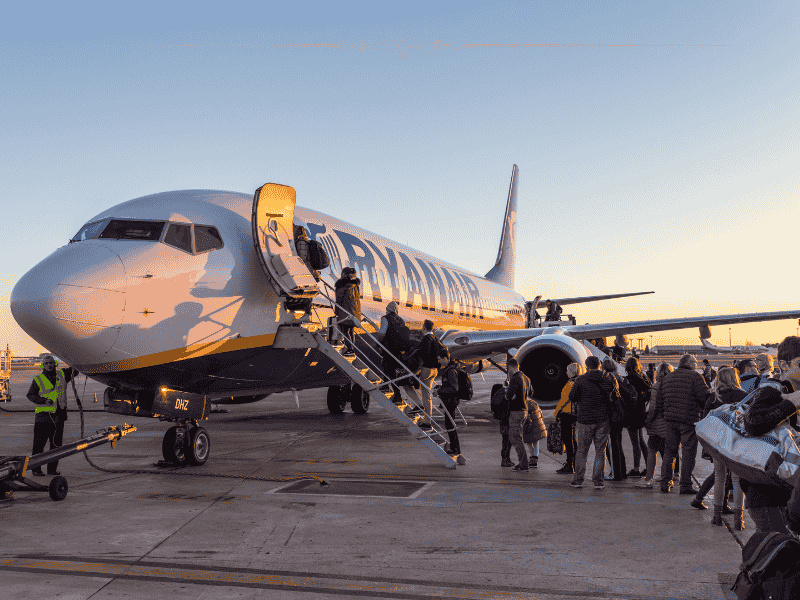
For American travelers visiting Europe who plan to take regional flights within the continent, the change has direct practical implications. Ryanair is Europe’s largest airline and operates an extensive network of routes connecting European cities. Americans arriving in Europe and planning to make connections to other European destinations will frequently encounter Ryanair flights as an option. The restructured seating policy changes the experience of flying with children and changes how much a Ryanair ticket actually costs once the full fare structure is considered.
The policy change comes after pressure from European regulators, particularly the UK Competition and Markets Authority, which challenged Ryanair’s previous family seating arrangement as potentially misleading to consumers. Ryanair’s response is framed as a compliance adjustment, but the practical effect is that the airline has moved toward an approach that is less transparent about where families will actually be seated unless they pay additional fees.
What Ryanair’s Family Seating Used to Look Like
Understanding what has changed requires knowing how Ryanair’s family seating previously worked. The airline’s longstanding policy allowed adults traveling with children to pay for a single adult reserved seat at a discounted rate, and to select up to four children’s seats beside that adult seat at no additional charge. The result was that a family of five would pay one reserved seat fee, typically ranging from twenty to forty euros depending on the route and timing, and would receive guaranteed seating assignments showing that all family members would be sitting together.
From a consumer perspective, this policy had genuine appeal. Parents knew exactly where their children would sit. The seat assignments were confirmed at the time of booking rather than being determined later. And the cost structure was explicit: one fee for the reserved seat, no additional charges for the children’s seats.
The transparency of this arrangement was actually Ryanair’s pitch to families. The airline marketed the policy as consumer-friendly, pointing to the clarity and the low cost compared to what other airlines charged. From the airline’s standpoint, the policy also served a business purpose. Families paying for reserved seats represented a revenue stream, and the efficiency of having families clustered together in specific rows solved operational challenges of gate boarding and cabin management.
The Regulatory Challenge That Prompted the Change
The European regulatory environment, particularly in the UK, took issue with the framing and structure of Ryanair’s family seating policy. The UK Competition and Markets Authority launched an investigation into whether Ryanair’s practices were misleading or anti-competitive. The investigation found that the policy, while not technically violating any law, was positioned in a way that suggested families should pay for reserved seats even when other airlines offered family seating as a standard part of the booking without additional charge.
The regulatory complaint focused on the transparency of pricing and the degree to which consumers understood the tradeoff they were making. By framing the policy as getting free children’s seats, Ryanair was, in the regulator’s view, obscuring the fact that families who did not pay for reserved seats would be separated or scattered throughout the cabin. The CMA’s position was that this structure was less consumer-friendly than the approach used by most other European airlines, where families traveling together are generally seated together as a matter of course, regardless of whether they paid a premium for that seating.
Ryanair’s response to the regulatory pressure was not to abandon the practice of charging for premium seating, but to restructure how the free option works. The airline agreed to provide free seat assignments for families who do not purchase reserved seats, but moved the assignment process to after check-in rather than at the time of booking. The practical result is that families waiting to see where they will be seated do not see their assignments until they have already checked in for the flight, and at that point are informed that they are likely to be seated toward the rear of the cabin.
How the New Policy Actually Works
The restructured policy is straightforward in its mechanics but significant in its implications. Adults traveling with children now have two distinct pathways depending on whether they choose to pay for reserved seating or not.
If a family decides to purchase reserved seating, the process works much as it did before. The adult pays a reserved seat fee, and then selects seats for themselves and up to four children at the time of booking. The seats can be anywhere on the aircraft where the airline has inventory available, including the premium front rows. The cost is typically twenty to forty euros, but the benefit is knowing exactly where everyone will sit before arriving at the airport.
If a family decides not to purchase reserved seating, the new pathway applies. The family is still entitled to free seat assignments, but those assignments are not revealed until after check-in, which happens in the airport or online immediately before the flight. At that point, families are informed where they have been seated. The airline’s own guidance acknowledges that families using this free allocation pathway are likely to be seated toward the rear of the aircraft, because the front rows tend to be reserved for passengers who pay premium seating fees or who have frequent flyer status.
For American accustomed to airlines where seating together is generally guaranteed without additional fees, the difference in approach is meaningful. The transparency issue that prompted the regulatory challenge is partially addressed by the new structure, because families are being honestly told they will likely be in the rear. But the practical experience for families is that Ryanair has effectively created a two-tiered system where families can either pay to sit together in preferred locations or accept rear-of-cabin seating as the cost of avoiding that fee.
Where This Leaves Travelers With Ryanair
For Americans traveling in Europe who plan to use Ryanair for regional flights, the seating policy matters differently depending on the route and the family structure. Ryanair operates flights throughout Europe, connecting major cities and providing one of the lowest-cost options for traveling between European destinations. An American family arriving in London and planning to visit Paris, Rome, Barcelona, or other European cities will likely encounter Ryanair flights as an option.
On longer-haul European flights, such as routes connecting London to southern Spain or central Europe to Scandinavia, the difference between sitting in the front of the cabin and sitting in the rear is more significant. The rear of an aircraft experiences more turbulence, is near the lavatories, and means longer walks to exit the plane after landing. For families with young children, the practical difference is meaningful enough to justify the cost of reserved seating on longer routes.
On short-haul European flights, where flight times may be only one to two hours, such as routes within the UK or between nearby countries, the practical difference is less significant. Many families may accept rear seating as a reasonable tradeoff for avoiding the reserved seat fee entirely.
The key consideration for American families is that they need to be explicit in their decision at the time of booking. The choice between paying for guaranteed front seating or accepting free but unpredictable rear seating needs to be made with full understanding of the implications. For families traveling with infants, very young children, or anyone with mobility challenges, the rear seating option is probably not viable. For families with older children or smaller groups, the free rear seating might be an acceptable option if the cost savings matter.
How Ryanair Compares to Other Airlines on Family Seating
Ryanair’s restructured policy is designed to align with how other European airlines handle family seating, though the specific practices vary across different carriers. Most major European airlines guarantee that families will be seated together without additional charges, treating family seating as a standard operational practice rather than a premium service. British Airways, Lufthansa, Air France, and other major carriers include family seating as part of the base ticket price.
Budget carriers within Europe have varying approaches. Some have adopted policies similar to what Ryanair is now moving toward, where families get free but unpredictable seating assignments. Others charge explicitly for family seating as a premium service. The variation across the industry reflects different business philosophies about how to balance operational costs with consumer expectations.
Ryanair’s position, as articulated by the airline’s leadership, is that the restructured policy aligns with industry standards while still allowing families to choose whether they want to pay for guaranteed seating or accept the free but less convenient option. The airline frames this as giving families a choice rather than forcing them into a particular arrangement.
The Cost Implications of the Change
For American families trying to understand how much a Ryanair ticket will actually cost, the seating policy change requires adding a decision point to the booking process. The headline fare price that appears when searching for flights does not include seating assignments. The actual total cost depends on whether families choose to pay for reserved seating or accept the free but rear-cabin alternative.
For travelers without children, nothing changes. Individual passengers still pay for reserved seats if they want them, or accept whatever assignment the airline provides for free.
For families with children, the question becomes whether the convenience and location of guaranteed seating is worth the additional fee. On a family of four, the difference between paying for reserved seats and accepting free rear seating might be thirty to fifty euros for a short European flight, or significantly more for a longer route where more premium seating is available.
The calculation is personal and varies by family circumstance. For families for whom the cost savings matter significantly, accepting rear seating is a financial choice. For families where the comfort or convenience of front seating matters more, the reserved seat fee is a cost they will choose to incur.